
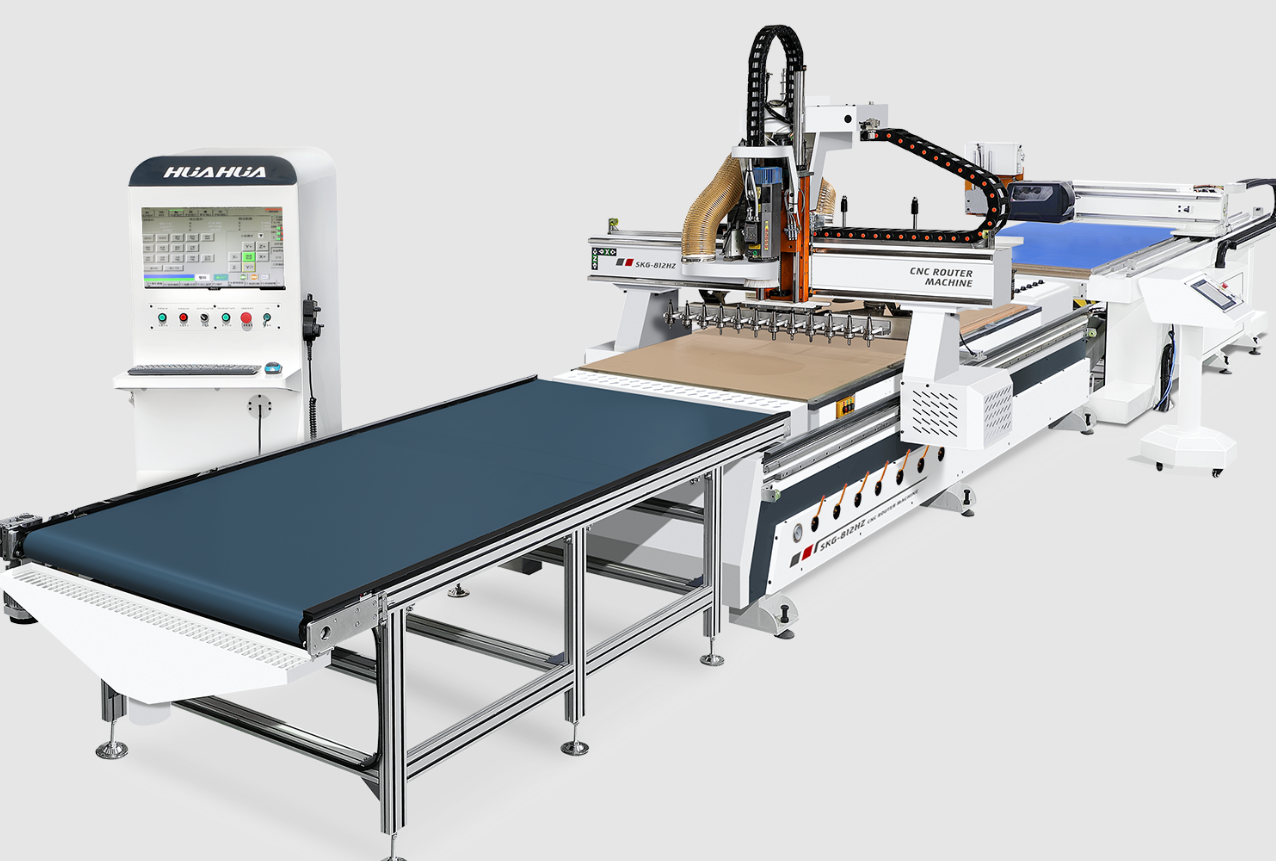
In the evolving field of woodworking, precision and efficiency are paramount. CNC woodworking machines have revolutionized the way artisans and manufacturers approach woodcraft, enabling intricate designs and consistent results. This article explores how to effectively use a CNC woodworking machine, focusing on practical steps and key considerations to optimize woodworking projects.
About the Technology
A CNC woodworking machine operates through computer numerical control, allowing users to automate the machining process with high precision. These machines interpret digital design files to control cutting tools that shape and carve wood. Modern CNC woodworking machine, such as the SKG-604HZ model, feature multiple spindles capable of performing grooving, milling, cutting, and drilling operations in a single setup. Equipped with precision ground 30 mm imported linear guide rails and a centralized lubrication system, these machines ensure smooth movement and maintain accuracy throughout the process.
Preparing for CNC Woodworking
The initial step in using a CNC woodworking machine involves proper preparation, which includes design file creation, material selection, and machine setup. Users must create or obtain a detailed digital design, usually in CAD (Computer-Aided Design) or CAM (Computer-Aided Manufacturing) formats. This design guides the machine’s cutting paths.
Material preparation is equally important. Selecting the right type of wood and ensuring it is free from defects will improve the quality of the finished product. The wood should be securely fixed on the machine bed to prevent movement during operation, which could compromise accuracy.
Machine setup is critical for safety and precision. This includes calibrating the spindle motors, verifying the alignment of the guide rails, and ensuring the lubrication system is functioning properly. Proper setup reduces wear on components and enhances the quality of cuts.
Operating the CNC Woodworking Machine
Once preparation is complete, the operation phase begins. The user uploads the design file to the CNC woodworking machine’s control system. The SKG-604HZ, with its four spindles, can perform multiple operations simultaneously or sequentially, which increases productivity.
During operation, it is important to monitor the machine closely. Although CNC machines automate most processes, operators should watch for signs of tool wear or material shifting. Adjustments may be necessary to maintain the machine’s resolution and accuracy. The centralized lubrication system plays a vital role in preventing mechanical failures and ensuring smooth spindle travel.
Safety protocols must be strictly followed throughout operation. Operators should wear protective equipment and keep the work area clear of obstructions. Emergency stop functions should be tested regularly to respond quickly to any unexpected issues.
Post-Processing and Maintenance
After the CNC woodworking machine completes the cutting and shaping operations, post-processing is essential to achieve the desired finish. This may include sanding, polishing, or assembling the cut components.
Maintenance of the CNC woodworking machine is a continuous responsibility. Regular cleaning, lubrication, and inspection of the guide rails and spindle motors help maintain the machine’s accuracy and extend its operational life. Preventive maintenance reduces downtime and costly repairs.
Ensuring Excellence with HUAHUA CNC
For those looking to invest in a reliable CNC woodworking machine, HUAHUA CNC offers models such as the SKG-604HZ that combine precision engineering with advanced features. Designed to guarantee accuracy and smooth operation, HUAHUA CNC machines come equipped with imported linear guide rails and a centralized lubrication system, ensuring consistent performance and longevity. Choosing a reputable brand like HUAHUA CNC supports woodworking professionals in achieving high-quality results with confidence and efficiency.