
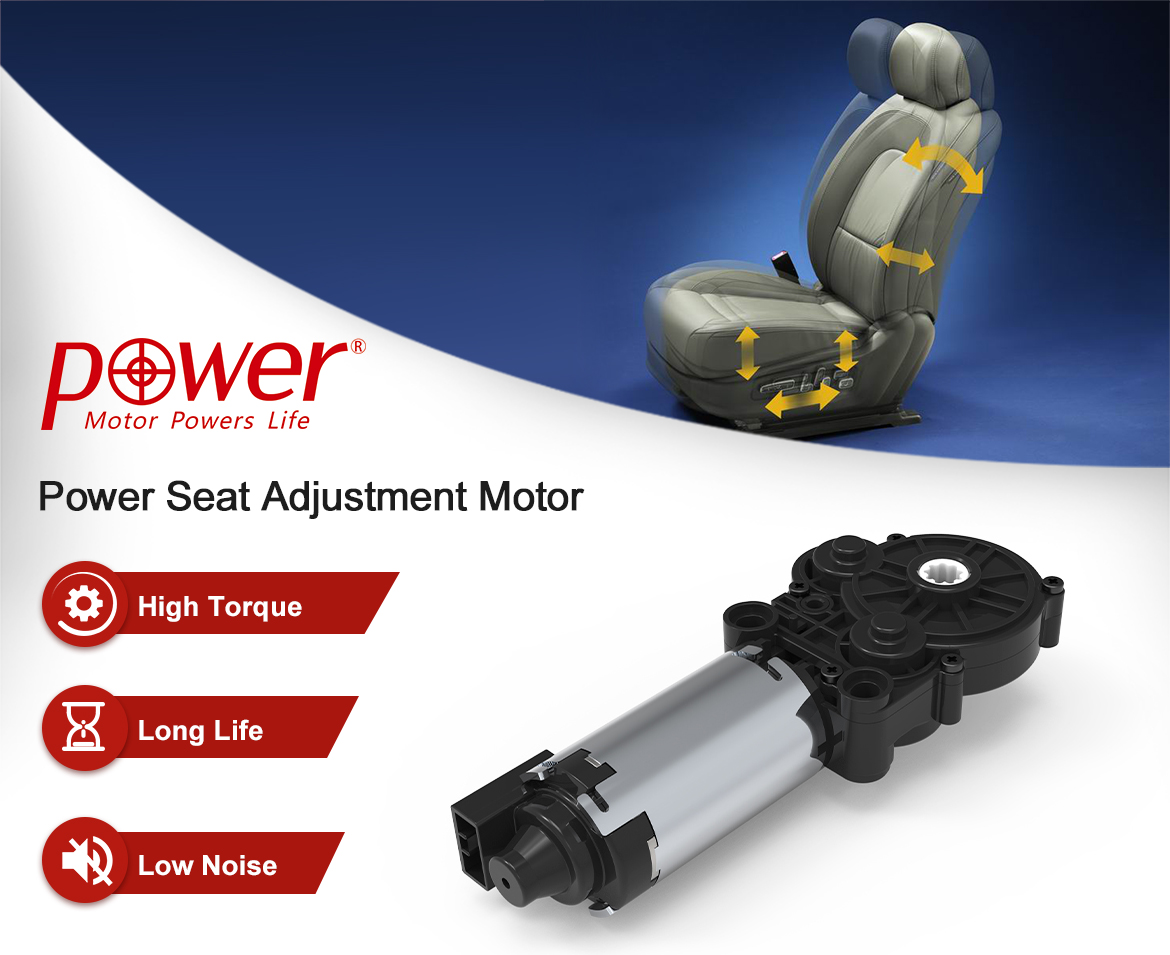
Several technical approaches exist for managing the rotational velocity of DC motors, a critical function in applications from automotive systems to industrial machinery. For entities like Power Motor, supplying car seat motor units to global clients, an understanding of these control methods is part of core engineering competency. The selection of a specific technique impacts efficiency, torque response, and overall system cost, making it a key consideration for electric motor manufacturers in China and their B2B partners.
Pulse Width Modulation (PWM) Technique
Pulse Width Modulation stands as a prevalent method for DC motor speed control. This approach functions by rapidly switching the power supply on and off. The average voltage delivered to the motor is adjusted by varying the duty cycle—the ratio of the “on” time to the total cycle time. A higher duty cycle results in a higher average voltage and faster motor speed. This technique is highly efficient because the switch is either fully on or fully off, minimizing power loss. It is commonly employed in precision applications like a car seat motor, where smooth and incremental adjustment is required.
Variable Supply Voltage Regulation
A more direct approach involves altering the RMS value of the voltage supplied to the motor’s terminals. Since the speed of a DC motor is approximately proportional to the applied voltage, reducing the voltage lowers the rotational speed. This can be achieved using variable resistors or more advanced electronic voltage regulators. While simpler in concept, linear voltage regulation can be less efficient than PWM, dissipating excess power as heat. This fundamental trade-off between circuit complexity and thermal management is a routine consideration for engineers at leading Chinese manufacturers like Power Motor when defining the optimal drive strategy.
Incorporating Closed-Loop Feedback Systems
For applications demanding precise speed consistency under varying loads, a closed-loop control system is implemented. This system uses a sensor, such as an encoder, to monitor the motor’s actual speed. The controller compares this real-time feedback to the desired setpoint and automatically adjusts the PWM signal or supply voltage to correct any deviation. This ensures the motor maintains a constant speed even when load changes, a feature that may be specified for advanced motion control systems beyond standard automotive components.
The regulation of DC motor speed relies on well-established electronic principles. Methods range from the efficient and widely adopted PWM to more direct voltage control and sophisticated closed-loop systems. For technical purchasers evaluating electric motor manufacturers in China, comprehending these options provides a foundation for specifying the correct motor and drive combination. Partnering with an expert manufacturer like Power Motor ensures this understanding is translated into optimal performance for the final application.