
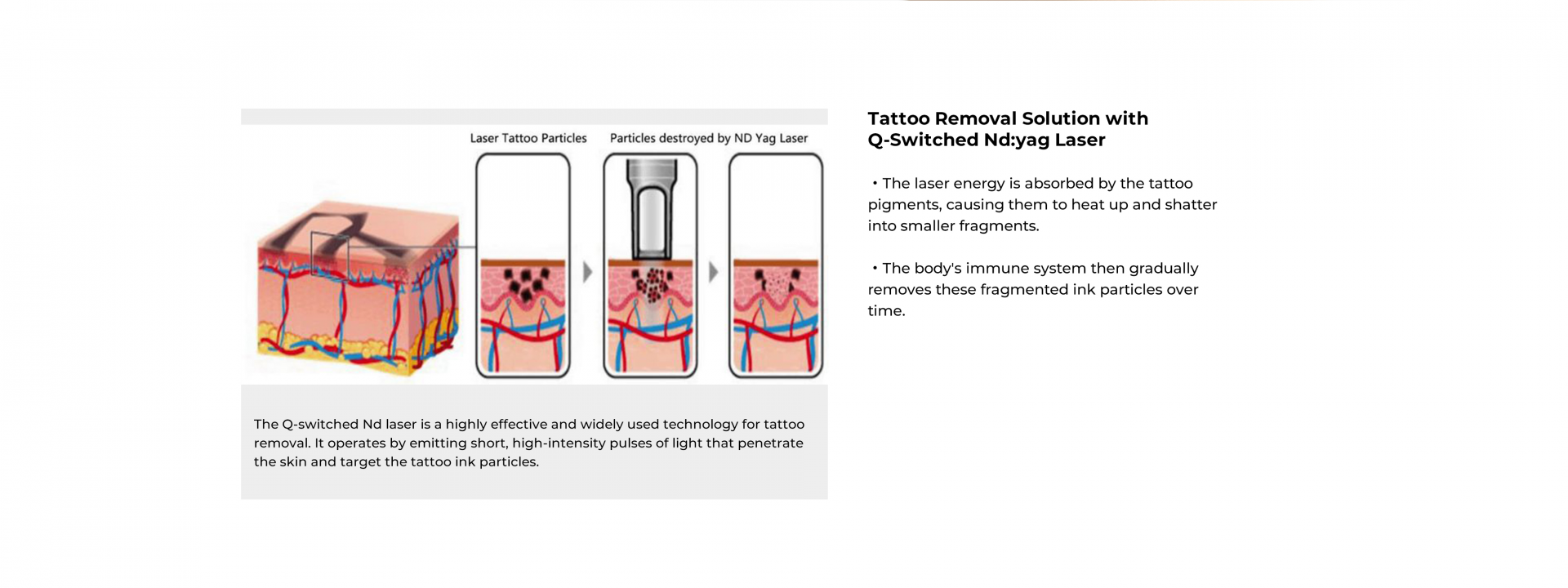
Dermatological facilities selecting equipment for dermal ink removal analyze light emission kinetics, pulse durations, and stress relaxation parameters to maximize clearance rates. Incorporating an advanced tattoo removal laser treatment platform allows clinicians to target locked ink particles without causing surrounding thermal damage. Engineering solutions from manufacturers like ENZOEYS reflect how short-pulse architectures combine photomechanical effects with controlled energy delivery for different treatment requirements.
Photothermal Mechanics and Particle Fragmentation
Short-pulse lasers deliver energy that is absorbed directly by target tattoo pigments, causing them to heat up rapidly and shatter into smaller fragments. Concentrated energy absorption breaks apart dense metallic or organic dyes locked inside dermal macrophages.
Once fragmented by laser treatment for tattoo removal, the body’s immune system gradually removes these fragmented ink particles over time through normal lymphatic drainage. Breaking dense pigment clusters into micro-particles supports steady clearing across subsequent treatment sessions.
Nanosecond Temporal Dynamics in Q-Switched Optics
Q-switched systems operate in the nanosecond pulse range, generating high peak power that induces strong photoacoustic shockwaves within target chromophores. Nanosecond energy compression matches the thermal relaxation times of medium-to-large ink deposits effectively.
Deploying a professional laser treatment for tattoo removal utilizing nanosecond pulses creates sufficient mechanical stress to fracture stubborn ink bonds. Controlled pulse delivery protects adjacent dermal structures while maintaining consistent ink breakdown across superficial and mid-dermal layers.
Picosecond Pulse Physics and Stress Relaxation Limits
Picosecond laser systems compress pulse durations further into the trillionths of a second, shifting tissue interaction heavily toward photomechanical stress rather than thermal expansion. Delivering energy faster than the acoustic stress relaxation time fractures microscopic pigment particles into ultra-fine dust.
In laser treatment for tattoo removal, ultra-short pulse durations reduce thermal diffusion to surrounding cellular tissue significantly. Finer particle fragmentation accelerates macrophage clearance rates, often reducing the total number of clinical visits required for dense or recalcitrant ink deposits.
The shorter pulse duration of picosecond systems may offer advantages for certain resistant or finely fragmented pigments, although treatment response depends on ink characteristics, wavelength, treatment parameters, and patient factors.
Wavelength Selectivity Across Multi-Color Ink Spectra
Targeting multi-colored artwork requires matching specific optical wavelengths to distinct ink absorption peaks. Fundamental 1064nm wavelengths penetrate deeply to target dark black and blue pigments, whereas frequency-doubled 532nm wavelengths target superficial red and warm-toned inks.
Systems like the LIFFAN Q6 incorporate multi-wavelength capabilities that enable practitioners to address varied pigment colors within a unified operational setup. Matching wavelengths to ink absorption spectra prevents unnecessary tissue heating while maximizing energy transfer to target pigments.
Pulse Energy Calibration and Thermal Management
Excessive energy density during short-pulse procedures can induce superficial epidermal blistering or post-inflammatory hyperpigmentation. Modulating spot sizes and pulse energy allows operators to deliver therapeutic fluences safely across varied Fitzpatrick skin phototypes.
Stable beam delivery ensures uniform photon distribution across the spot footprint without localized energy spikes. Consistent optical output protects skin integrity while supporting steady pigment fragmentation during rapid scanning passes.
When energy calibration is paired with real-time thermal monitoring, clinicians gain the ability to adjust parameters mid-procedure based on tissue response—turning static treatment protocols into dynamic, patient-specific regimens. This adaptive approach not only reduces the risk of adverse events but also enables more aggressive treatment where appropriate, optimizing clearance rates without compromising safety across a diverse patient base.
Clinical Throughput and Equipment Operational Stability
High-volume aesthetic centers demand optical hardware built for continuous daily usage without energy attenuation. Fluctuating pulse output during extended clinical operations leads to uneven ink breakdown and unpredictable clearing timelines for clients.
The LIFFAN Q6 is designed for 24-hour continuous operation and stable high-frequency output. Its stable high-frequency output can support demanding treatment schedules and repeated clinical use.
Comparative Assessment of Q-Switched and Picosecond Modalities
Choosing between nanosecond Q-switched units and picosecond systems depends on a clinic’s primary patient demographic, budget constraints, and clinical focus. Q-switched systems provide dependable performance and cost-effective operation for standard black and dark-ink removals.
Picosecond platforms offer advantages for clearing fine, residual pigment particles or resistant ink colors in specialized centers. Evaluating maintenance requirements, initial capital costs, and treatment versatility guides practice directors toward optimal procurement choices.
Practical Integration in Modern Aesthetic Centers
Expanding clinical service offerings through short-pulse laser integration enhances practice utility and revenue potential. Multi-application short-pulse platforms frequently handle benign pigmented lesions, carbon peels, and skin rejuvenation alongside ink removal.
Utilizing a comprehensive tattoo removal laser treatment device allows practices to maximize equipment utilization across diverse client requests. Multi-functional capability shortens financial payback periods while providing versatile clinical solutions for expanding practice operations.
Conclusion
Understanding the distinct physical mechanisms of nanosecond Q-switched and picosecond light delivery enables clinic managers to select hardware aligned with operational goals. While picosecond units excel at shattering residual micro-particles, Q-switched devices provide reliable, high-peak power for primary pigment clearing. Technological innovations designed by ENZOEYS demonstrate how robust short-pulse systems support safe, effective laser treatment for tattoo removal, helping clinical practices achieve consistent treatment outcomes across diverse client profiles.