
Power electronics are becoming more compact while handling higher power levels than before. Engineers often compare inductance, current ratings, and resistance when selecting magnetic components, but physical dimensions also influence the final design. For industrial equipment, choosing an experienced inductor manufacturer means evaluating how electrical and mechanical characteristics work together throughout product development rather than considering them separately.
Electrical Performance Is Only Part of the Selection Process
Electrical specifications remain the starting point when evaluating an inductor. Parameters such as inductance, DC resistance (DCR), saturation current (Isat), and RMS current (Irms) help engineers understand how the component behaves under different operating conditions. These values affect energy storage, current ripple, efficiency, and thermal performance.
However, electrical performance alone does not determine whether an inductor fits a project. Two components with similar inductance values may perform differently after installation because their physical structures influence airflow, spacing, and heat transfer. That is why engineering teams usually compare mechanical drawings together with electrical datasheets.
For B2B equipment manufacturers, balancing these factors early in the design stage helps reduce unnecessary PCB revisions and simplifies later verification work.
Why Package Dimensions Influence PCB Layout
Mechanical dimensions directly affect printed circuit board design. Engineers must reserve sufficient space for surrounding components, copper traces, connectors, and cooling structures before finalizing the PCB layout. Even a small dimensional difference may require changes to the board arrangement.
Height is another important consideration. Industrial power supplies, communication equipment, and automotive electronic modules often have strict enclosure limitations. An inductor that exceeds the available installation height may interfere with covers, heat sinks, or airflow channels inside the product.
Dimensional tolerances also contribute to manufacturing stability. Consistent length, width, and height help automated production equipment position components accurately during assembly, reducing adjustment work on production lines.
Mechanical Size Also Affects Thermal Performance
As operating current increases, heat management becomes an important design consideration. Component size influences heat dissipation because larger magnetic structures may provide different thermal characteristics than smaller packages operating under similar electrical conditions.
Designers therefore examine current ratings together with package dimensions instead of reviewing them individually. When an application requires continuous operation, the relationship between temperature rise, airflow, and installation spacing becomes part of the overall engineering evaluation.
Thermal analysis is particularly important in compact industrial equipment where multiple power components operate close to each other. Maintaining suitable spacing allows heat to dissipate more effectively and helps keep electrical performance stable during long operating periods.
Looking Beyond the Datasheet with MHA2213SG101M
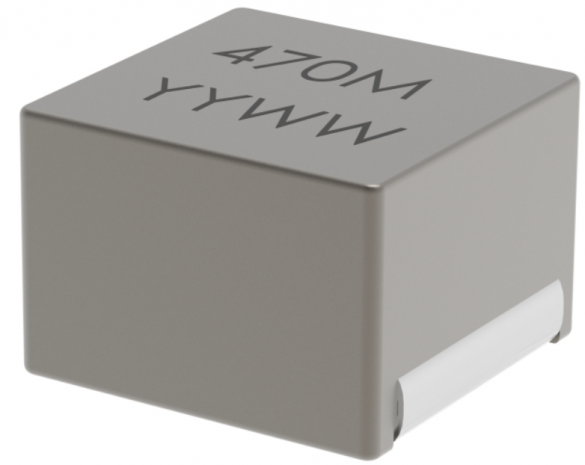
A practical example is Item Number MHA2213SG101M from the MHA2213SG SERIES. The component measures 22.5±0.3 mm in length, 22.0±0.3 mm in width, and 12.7±0.3 mm in height. These dimensions allow engineers to evaluate installation space before completing PCB layouts.
Its electrical specifications include an inductance of 100±20% μH, a maximum DCR of 51.6 mΩ, a saturation current of 13 A, and an RMS current rating of 9 A. Each parameter provides different information about expected operating conditions rather than describing overall performance by itself.
During product development, engineers typically review both the mechanical drawing and the electrical specifications together. This approach helps determine whether the component matches converter topology, cooling conditions, and structural requirements within the complete system.
Why Manufacturing Consistency Matters for an inductor manufacturer
Industrial customers often purchase magnetic components for long production cycles rather than individual prototypes. For this reason, manufacturing consistency becomes as important as component performance. Stable dimensions support automated assembly, while consistent electrical characteristics simplify product qualification across multiple production batches.
Different industries also require different magnetic solutions. Power modules commonly use high-frequency electronic transformers, PFC inductors, common-mode inductors, differential-mode inductors, planar transformers, and molded power inductors. Automotive electronic systems incorporate OBC transformers, DC-DC transformers, drive transformers, BMS transformers, and filter inductors. Solar-storage-charging equipment frequently applies common-mode inductors, differential-mode inductors, micro-inverter transformers, and high-power DC-DC transformers. Communication equipment also relies on traditional network transformers and chip LAN transformers for different networking applications.
Matching these products to their intended operating environments requires collaboration between equipment designers and component suppliers throughout the development process.
Conclusion
Mechanical dimensions influence much more than installation space. They affect PCB layout, automated manufacturing, airflow, thermal management, and overall product integration. A suitable component structure can help engineers optimize internal arrangements and improve the efficiency of equipment design.
When evaluating an inductor manufacturer, industrial customers generally compare both mechanical and electrical characteristics to support reliable system design. Factors such as size, current capability, material selection, and application environment are often considered during the selection process.
Mentech develops customized magnetic components for power modules, new energy vehicles, solar-storage-charging systems, and communication applications. Their product development process focuses on matching component design with the specific requirements of different projects and application scenarios.
By combining engineering experience with customized manufacturing capabilities, Mentech provides B2B customers with magnetic solutions that match practical requirements across different industries. These solutions help customers address challenges related to space limitations, performance needs, and system integration.