
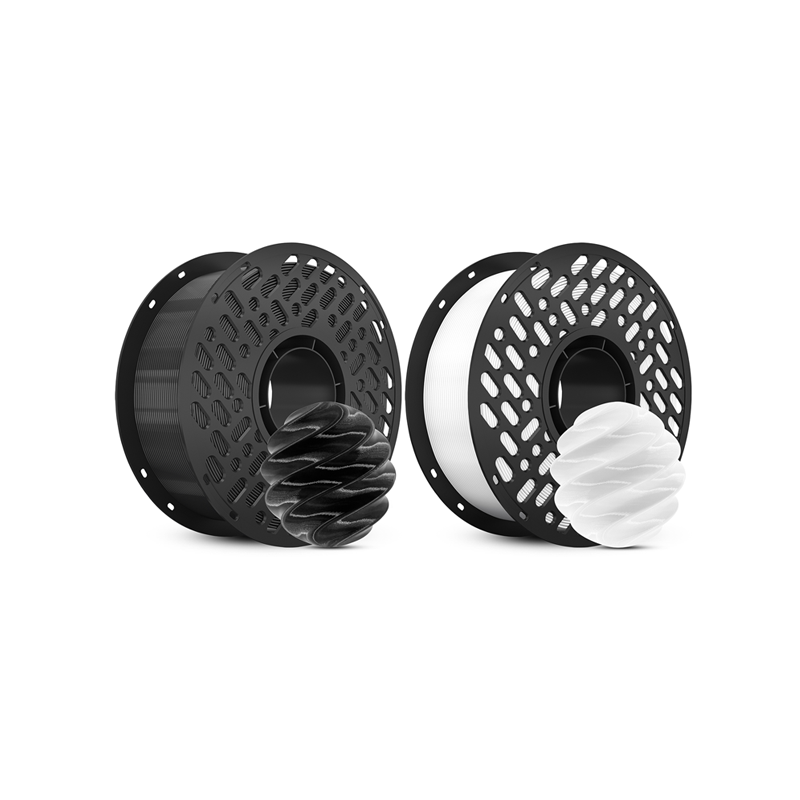
3D printing users in small workshops and prototyping environments are increasingly focused on balancing faster production cycles with consistent part quality. While conventional filaments offer stable and well-understood performance, emerging material formulations are designed to support higher printing speeds under controlled conditions. The key question for engineers and operators is whether these speed-oriented materials can still maintain sufficient structural reliability in functional applications.
Defining the Baseline Characteristics of Standard PETG
To understand performance differences, creators must evaluate the core traits of traditional glycol-modified polyesters. Standard PETG offers an excellent balance between structural rigidity, impact resistance, and ease of processing. Its molecular structure allows for strong layer adhesion when printed at typical residential speeds, yielding parts that handle real-world physical stress well.
Accelerated manufacturing requires a material to flow smoothly through the hotend under high pressure. Standard formulations often suffer from under-extrusion when pushed beyond their volumetric flow limits, creating weak internal spaces. This specific operational limitation led to the development of specialized chemical compositions that melt and solidify much more uniformly during rapid movements.
Strength Comparison Between High-Speed PETG and Standard PETG
When evaluating if is petg high speed weaker than normal, users must consider layer bonding dynamics. Traditional materials can form weak bonds at high velocities because the plastic cools before fully fusing with the previous layer. However, modified rapid-printing versions utilize precise chemical additives that lower melt viscosity, allowing adjacent layers to interlock quickly.
The Crucial Role of Volumetric Flow in Layer Fusion
Material weakness in fast prints usually results from insufficient heat transfer rather than inherent polymer flaws. A high speed petg variant utilizes specific thermal stabilizers that accelerate heat absorption inside the nozzle. This modification ensures that the core of the filament reaches the correct fluid state even when moving at accelerated rates.
Analyzing Ultimate Tensile Strength in Rapid Components
Testing indicates that when proper configurations are maintained, components printed with optimized rapid materials display may maintain comparable strength under optimized printing conditions. Tensile strain distribution remains uniform across the specimen because the improved flow prevents micro-void formation. Consequently, individual custom workshops can confidently utilize these rapid formulations for end-use functional assemblies without worrying about sudden failure.
Impact Resistance Variations Across Different Speeds
Impact strength relies heavily on the elasticity and thickness of the deposited plastic walls. Standard polymers printed at extreme velocities become brittle due to uneven crystallization during the cooling phase. Modified versions combat this issue by sustaining a stable molecular configuration during rapid temperature drops, ensuring the finalized model absorbs sudden physical shocks efficiently.
When High-Speed PETG Is a Better Choice for Functional Parts
Small-scale custom factories and design studios benefit directly from reducing their overall print cycles. Utilizing a reliable high speed petg enables operators to clear their production queues faster, increasing the weekly output of their machinery. This time optimization allows businesses to deliver functional functional prototypes to clients without delaying verification processes.
Verification Methods in Large Printing Environments
Validating material properties requires rigorous continuous testing across hundreds of identical machines. For instance, CaiLab operates a massive internal infrastructure featuring 2000 active 3D printers to test new material formulas. This internal testing framework allows developers to monitor real-world stress performance, rapidly adjusting raw chemical compositions based on actual mechanical results.
Evaluating the Influence of Raw Material Sourcing
The baseline stability of any engineering filament depends entirely on the purity of its primary ingredients. They source critical raw materials from reliable global suppliers like NatureWorks to guarantee a highly consistent production process. This meticulous sourcing strategy prevents diameter fluctuations, ensuring that the material feeds evenly into the extruder regardless of machine velocity.
Optimizing Cooling Parameters for Fast Printing
Achieving maximum strength during rapid fabrication requires careful management of the active cooling fans. If the cooling rate is too aggressive, the high speed petg will contract rapidly, inducing internal stresses that encourage warping. Balancing fan speeds allows the polymer chains to align correctly, maximizing the structural load-bearing capacity of the object.
Dimensional Accuracy Considerations under High Acceleration
High-velocity movements introduce inertial forces that can distort fine details on complex models. Standard PETG struggles with quick directional changes due to its higher melt elasticity, causing slight ringing or ghosting artifacts. Rapid-printing formulations reduce this elastic resistance, ensuring that sharp corners and tight tolerances remain perfectly accurate during rapid production.
Application Scenarios for Accelerated Polymer Elements
Custom brackets, electronic enclosures, and robotic components represent ideal use cases for fast-printing glycol materials. These parts require a dependable balance of durability, chemical resistance, and precise geometry. By deploying optimized fast-printing filaments, creators can manufacture industrial-grade functional components in a fraction of the traditional production time.
Synthesizing Strength Outcomes in Rapid Manufacturing
Accelerated extrusion does not inherently compromise the structural integrity of a finalized model. Modern material modifications successfully bridge the gap between processing velocity and final component durability. Selecting specialized, factory-validated compounds allows creators to maximize their machine output while ensuring every functional part withstands real-world mechanical stress.