
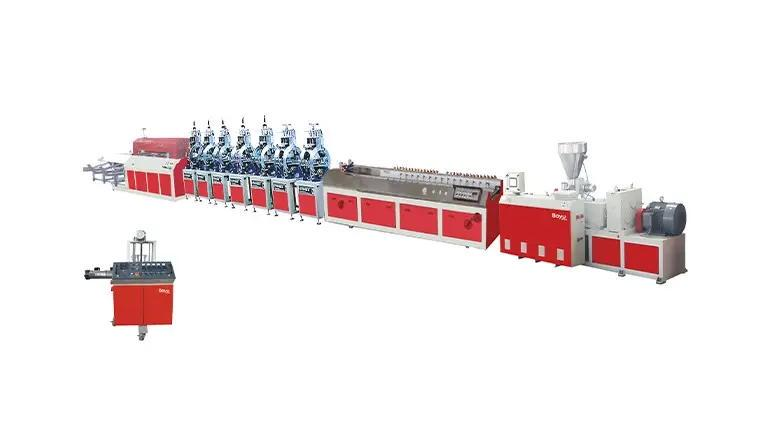
Launching a new extrusion project involves more than equipment installation. Manufacturers need to evaluate whether the production line can achieve stable output, consistent quality, and efficient operation after startup.
A pvc profile production line requires careful monitoring during the initial production stage. By tracking key performance indicators such as output, product quality, energy consumption, and equipment stability, manufacturers can identify improvement opportunities and ensure smoother operation.
For companies investing in PVC profile manufacturing, a successful startup provides the foundation for long-term production efficiency and market competitiveness.
Key Performance Indicators for a PVC Profile Extrusion Line Startup
A successful startup process depends on several measurable factors. These indicators help manufacturers evaluate whether the equipment, materials, and operating procedures are working together effectively.
Production output is one of the first metrics to monitor. Manufacturers should compare actual production capacity with the designed capacity of the equipment. Stable output indicates that the extrusion system, temperature control, and material processing conditions have been properly adjusted.
However, production volume alone does not determine startup success. Product consistency is equally important. PVC profiles are widely used in construction, decoration, furniture, and industrial applications, where accurate dimensions and reliable performance are often required. Regular inspection of profile size, surface appearance, and mechanical properties helps ensure that products meet customer expectations.
Equipment availability is another essential measurement. During the early operation stage, unexpected downtime may reveal problems related to machine adjustment, component compatibility, or operating procedures. Tracking running hours, maintenance frequency, and production interruptions allows manufacturers to understand equipment reliability and optimize future operations.
Evaluating Product Quality and Process Stability
Product quality is a key factor when commissioning a new pvc profile extrusion line. Even if the production line reaches the expected output, unstable quality can increase material waste and affect customer satisfaction.
Surface appearance is one of the main quality indicators for PVC profiles. Problems such as uneven surfaces, color differences, or visible defects may result from unstable material formulation, improper temperature settings, or inconsistent extrusion conditions. Maintaining stable processing parameters helps improve product uniformity during continuous production.
Dimensional accuracy should also be monitored carefully. PVC profiles need to maintain consistent width, thickness, and shape throughout the manufacturing process. The performance of extrusion systems, calibration equipment, and cooling units all influence the final dimensions of the products.
Material utilization is another useful metric during startup. A properly adjusted extrusion process can reduce unnecessary waste and improve production efficiency. By analyzing scrap rates and adjusting processing conditions, manufacturers can gradually improve resource utilization and reduce operating costs.
Measuring Energy Efficiency and Operating Costs
Energy consumption has become an important consideration for extrusion manufacturers. Since PVC profile production involves heating, extrusion, cooling, and continuous operation, equipment efficiency can have a direct impact on manufacturing expenses.
During the startup stage, manufacturers can measure electricity consumption per unit of output and compare the results with expected production targets. Stable equipment operation, optimized heating control, and efficient production management can help improve energy utilization.
Maintenance requirements should also be included in performance evaluation. Equipment that requires frequent adjustments or repairs may increase operating costs and reduce production efficiency. Therefore, manufacturers should pay attention to equipment reliability, component quality, and technical support when selecting an extrusion solution.
Boyu has more than 20 years of experience in plastic extrusion equipment manufacturing and provides solutions for PVC profiles, SPC flooring, and other extrusion applications. It focuses on equipment innovation, customized solutions, and engineering support for customers with different production requirements. Its extrusion equipment features automated control systems designed to support stable operation and efficient production management.
Improving Long-Term Performance After Startup
The startup stage is by no means the end of a production line’s lifecycle. After commissioning, manufacturers should continue collecting operational data and optimizing production processes.
Regular performance reviews can help identify improvement opportunities, including parameter adjustments, maintenance planning, and workflow optimization. A data-based approach allows manufacturers to maintain stable product quality while improving production efficiency.
Choosing equipment with suitable performance and technical support is also important for long-term development. With proper planning and a well-configured pvc profile production line, manufacturers can build a more reliable production process and better respond to future market demands.